
Every brokerage comparison starts with the same claim, that stock trading is free now. Our dataset of 50 US brokerages, verified on September 15, 2026, mostly agrees: of the 41 brokers with a recorded stock and ETF commission, 36 charge $0. The interesting part of the comparison is everything around that zero, because the five brokers that still charge, the options fees that replaced commissions, and the annual fees hiding at the bottom of the schedule are where brokers actually differ.
The five that still charge for a stock trade
Two brokers charge a flat per-trade commission: Zacks Trade at $1.00 and Tiger Brokers at $0.99. Three professional platforms charge per share instead, CenterPoint Securities and Cobra Trading at $0.003 per share and SpeedTrader at $0.0044, pricing that suits high-volume traders rather than beginners. The other nine brokers in the dataset record no stock commission at all because the field does not apply the same way to them: futures platforms, robo-advisors and kids investing apps sit in the records with the commission blank rather than zero, and this comparison keeps that distinction visible instead of quietly treating blank as free.
Options fees are the real comparison
With stock commissions gone, the contract fee is the number that separates brokers. It is recorded for 29 of the 50. Eight brokers charge $0 per contract: Robinhood, Webull, SoFi Invest, Public, moomoo, Firstrade, eToro US and Alpaca Securities. The median recorded fee is $0.59, the familiar $0.65 is charged by eight brokers including Charles Schwab and Fidelity, and four brokers charge $1.00: Vanguard, tastytrade, Zacks Trade and U.S. Bancorp Investments. A trader placing 100 contracts a month pays nothing at the first group and $100 a month at the last, on the same trades. Our separate guide to options contract fees by broker walks through how fast that adds up.
The quiet fees: annual charges and minimums
Nine of the 50 brokers charge an annual fee, and they cluster where you would not think to look. Greenlight records $131.76 a year and Magnifi $132, both subscription-style products rather than classic brokerages, followed by Acorns at $48, M1 Finance and Stash at $36, Cobra Trading at $35, Vanguard at $25 and UNest at $24. Account minimums tell a similar story in reverse: 41 of the 50 open at $0, while CenterPoint Securities requires $50,000 and Lightspeed Trading and SpeedTrader $2,500 each, marking them as professional platforms rather than starter accounts.
Access features, counted
Fractional shares are offered by 28 of the 50 brokers, extended-hours trading by 24, and paper trading by 14. SIPC membership is recorded for 44. None of these features decides a comparison alone, but together they separate the full-service platforms from the narrow apps, and they are the fields a shopper can verify before opening anything.
Switching is the other half of the comparison
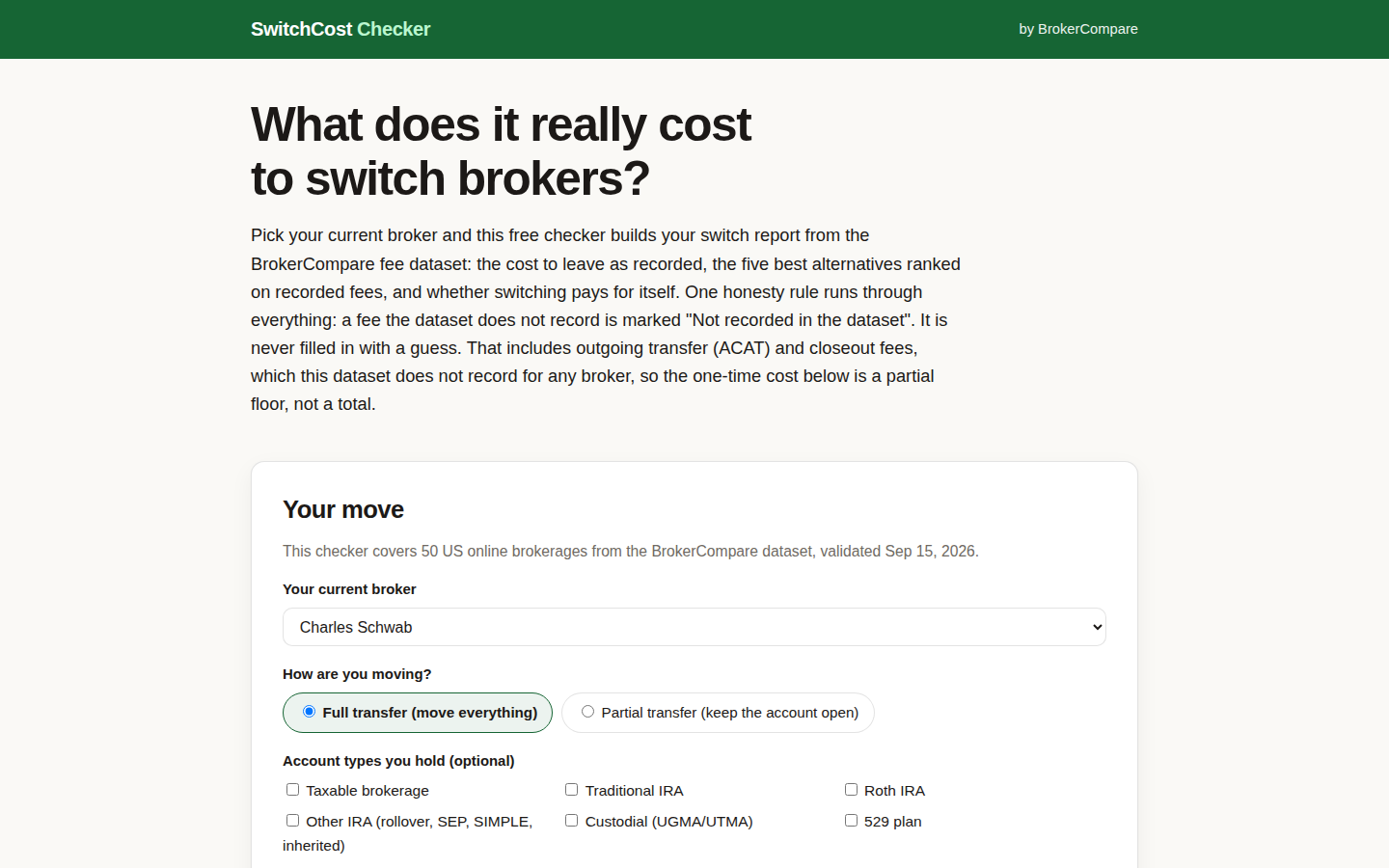
A comparison only pays if moving is cheap. Transfer-out fees and lost promotions decide that, and our SwitchCost Checker prices a switch from the recorded fees before you start one. The companion guides cover what a transfer costs broker by broker.
How this comparison was counted
Every figure comes from BrokerCompare's own dataset of 50 US brokerages, with fees and features verified on September 15, 2026. Where a broker's record leaves a field blank, the article says so rather than estimating it. Fees change, and a broker's current schedule always outranks a September snapshot, so confirm the number that matters to you on the broker's own pricing page before you act.